
Germany’s cybersecurity market is entering a decisive year. With escalating threat levels, rapidly expanding attack surfaces and the operational impact of NIS 2, organizations of all sizes must reassess their security operations capabilities.
At the it-sa cybersecurity trade fair in Nuremberg, I presented the current market forecast for managed security services in Germany as part of InfoGuard's Breach Talk. ISG forecasts a 15.2% market growth for managed security services from €2.095 billion in 2025 to €2.413 billion in 2026. This growth is driven by urgent enterprise demand for stronger detection and response capabilities.
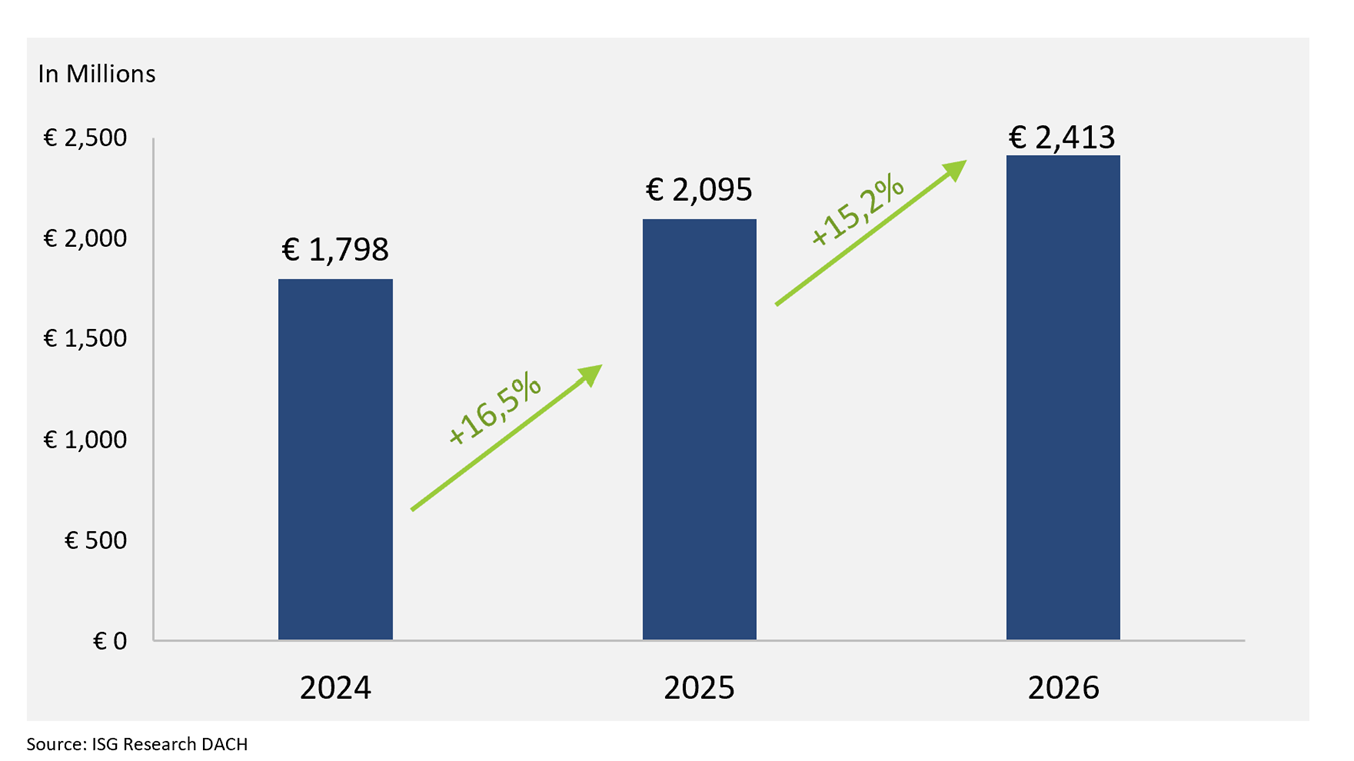
Figure 1: Market Growth for Managed Security Services
Against this backdrop, the role of modern security operations centers (SOC) is shifting from a technical function to a strategic one. CIOs, CISOs and boards now view SOC maturity as a prerequisite to safeguarding business continuity, supply chain integrity and operational stability.
Why SOC Capabilities Are Now a Board-Level Priority
Security operations have moved far beyond monitoring log streams. SOC providers are expected to deliver:
- Cross environment visibility across IT, OT, IoT, cloud and SaaS
- Real time detection aligned with business critical risks
- Automated triage and orchestration to handle alert volumes
- Threat intelligence integration to anticipate malicious activity
Coordinated, rapid response to minimize business disruption
By the end of 2026, the German market for managed security services will grow to over €2.4 billion. This corresponds to market growth of more than 15%, which is significantly higher than the already-strong growth of the cybersecurity market as a whole.
Large German enterprises continue to push sophistication in hybrid SOC and managed detection and response (MDR) models, but midmarket organizations have emerged as the fastest growing adopters of SOC and MDR services. Driven by skill shortages and disproportionate regulatory burden, they increasingly turn to external SOC partners to compensate for internal limitations.
Threat actors recognize this dynamic: midmarket organizations are now deliberately targeted as perceived “easier to breach” entry points into larger supply chains. The result is a broad-based surge in demand across enterprises.
Regulation Raises the Stakes: NIS 2 Becomes Operational
With the NIS 2 directive transposed into German law in December 2025, thousands of additional (mid-sized) companies now fall under stricter cybersecurity requirements.
This forces organizations to:
- Implement more robust detection and response processes
- Expand incident reporting capabilities
- Strengthen OT security and monitoring
- Demonstrate measurable improvements in risk mitigation
For many CISOs, this transforms SOC capabilities from “important” to “non negotiable.” Organizations unable to meet these requirements — especially in critical sectors — face real operational and legal exposure.
5 Steps Enterprises Should Take Now
To meet the combined pressures of compliance, threat evolution and talent scarcity, organizations should immediately focus on:
- Modernize your SOC: Assess detection maturity and close visibility gaps across hybrid environments.
- Consider hybrid and co managed SOC models: Combine internal governance with external 24/7 operational depth.
- Automate and orchestrate: Adopt SOAR-based workflows and AI-supported triage to reduce response times.
- Build intelligence driven operations: Integrate threat intelligence, analytics and continuous threat hunting.
Focus on OT security: Address monitoring challenges across industrial systems, a major NIS 2 driver.
Enterprises that accelerate these steps now will be better positioned to meet regulatory expectations and build resilience against emerging threats.
Where Providers Must Differentiate in 2026
The competitive landscape for SOC/MDR providers is rapidly evolving. Winning providers will stand out by:
- Delivering next generation SOC/MDR capabilities supported by advanced analytics, AI guided triage and autonomous response mechanisms
- Offering true incident lifecycle coverage, not just detection
- Providing co managed models that enhance customer teams instead of replacing them
- Integrating contextualized threat intelligence to improve accuracy
- Demonstrating rapid onboarding and measurable customer outcomes
Bringing visibility and control into OT, cloud and distributed workplaces
Differentiation is no longer based on toolsets. It is driven by operational maturity, automation depth and business-aligned response.
ISG Cybersecurity Provider Lens™ 2026
The new Cybersecurity Provider Lens 2026 cycle is underway. This year, we will analyze providers across these markets:
- Strategic Security Services (SSS)
- Technical Security Services (TSS)
- Next Gen SOC / MDR Services
- Risk based Vulnerability Management
- Post Quantum Encryption Consulting (NEW!)
- Data Leakage / Loss Prevention (DLP) & Data Security
- Extended Detection & Response (XDR)
This is a widely recognized market benchmark enterprises use to select cybersecurity partners. The results will be published in the summer of 2026. Please contact us if you offer cybersecurity products or services in Australia, Brazil, France, Germany, Switzerland, U.K. or the U.S. and have not yet received an invitation to the provider survey.
The 2025 Provider Lens Cybersecurity study remains a valuable reference for enterprises assessing the market and understanding competitive positioning. The report highlights evolving provider capabilities and emerging differentiation.
Enterprises looking to accelerate SOC transformation — and providers seeking transparent market intelligence — can still access the full 2025 assessment.
Contextualizing ISG’s Role in the SOC and MDR Landscape
Developments in the SOC and MDR environment are prompting both enterprises and service providers to seek greater clarity regarding market structures, maturity levels and service models. In this context, ISG provides independent analyses and observations that help stakeholders better understand market dynamics:
For enterprises:
- Assessment of trends related to SOC strategies
- Transparency around available provider models
- Analysis of capabilities and service scopes
Consideration of operating models and maturity levels
For service providers:
- Reflections on client expectations and market sentiment
- Contextualization of their position in independent market evaluations
- Analysis of the competitive landscape
Observation of enterprise buying behavior
About the author

Frank Heuer
Frank Heuer is a Senior Advisor at ISG Germany. His main areas of coverage include the digital workspace, communications, social business & collaboration, cloud computing with a special focus on workspace/unified communications & collaboration as a service, and security.
The focus of his work is on advising ICT providers on strategic and operational marketing and sales issues. Mr. Heuer act as speaker on conferences and in web casts and is a member of the IDG expert network.
