5 Ways to Optimize Application Sourcing Costs in an AI-Enabled Market
Application sourcing —software, support, labor and managed services — presents a prime opportunity to reduce spend and improve value realization.

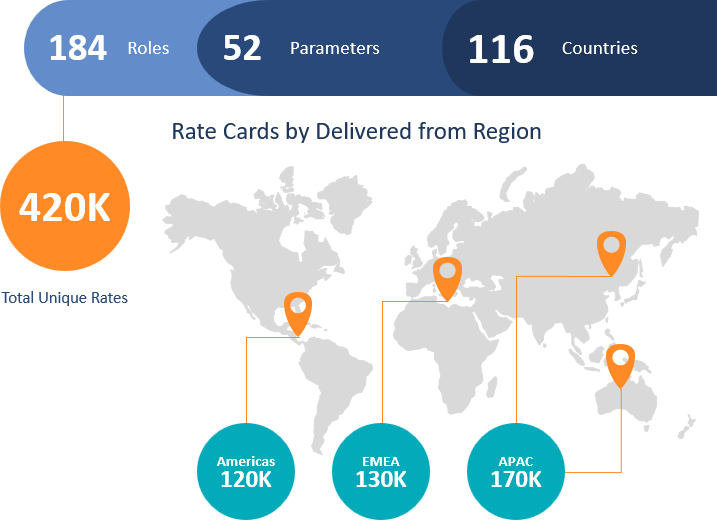
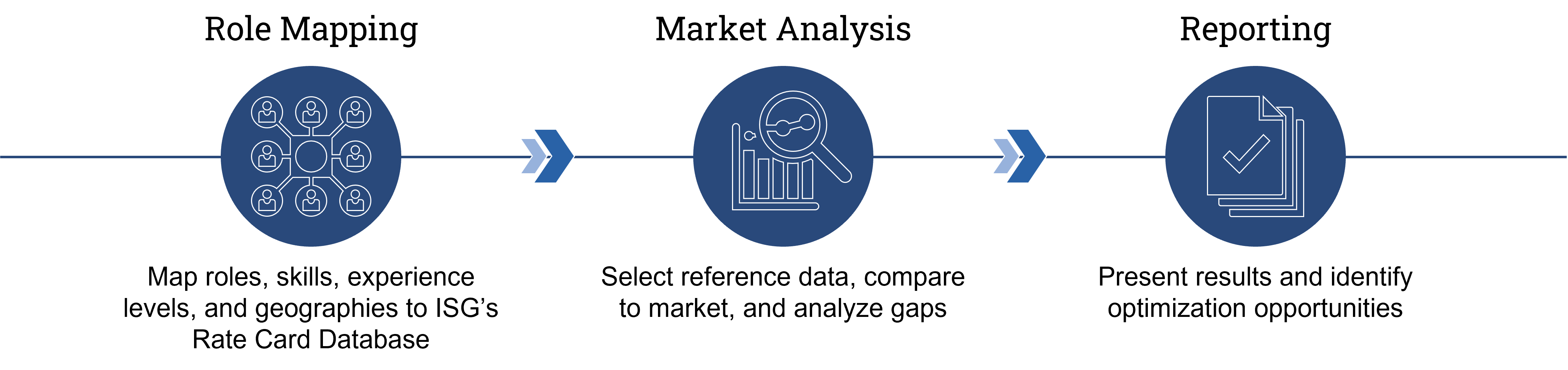
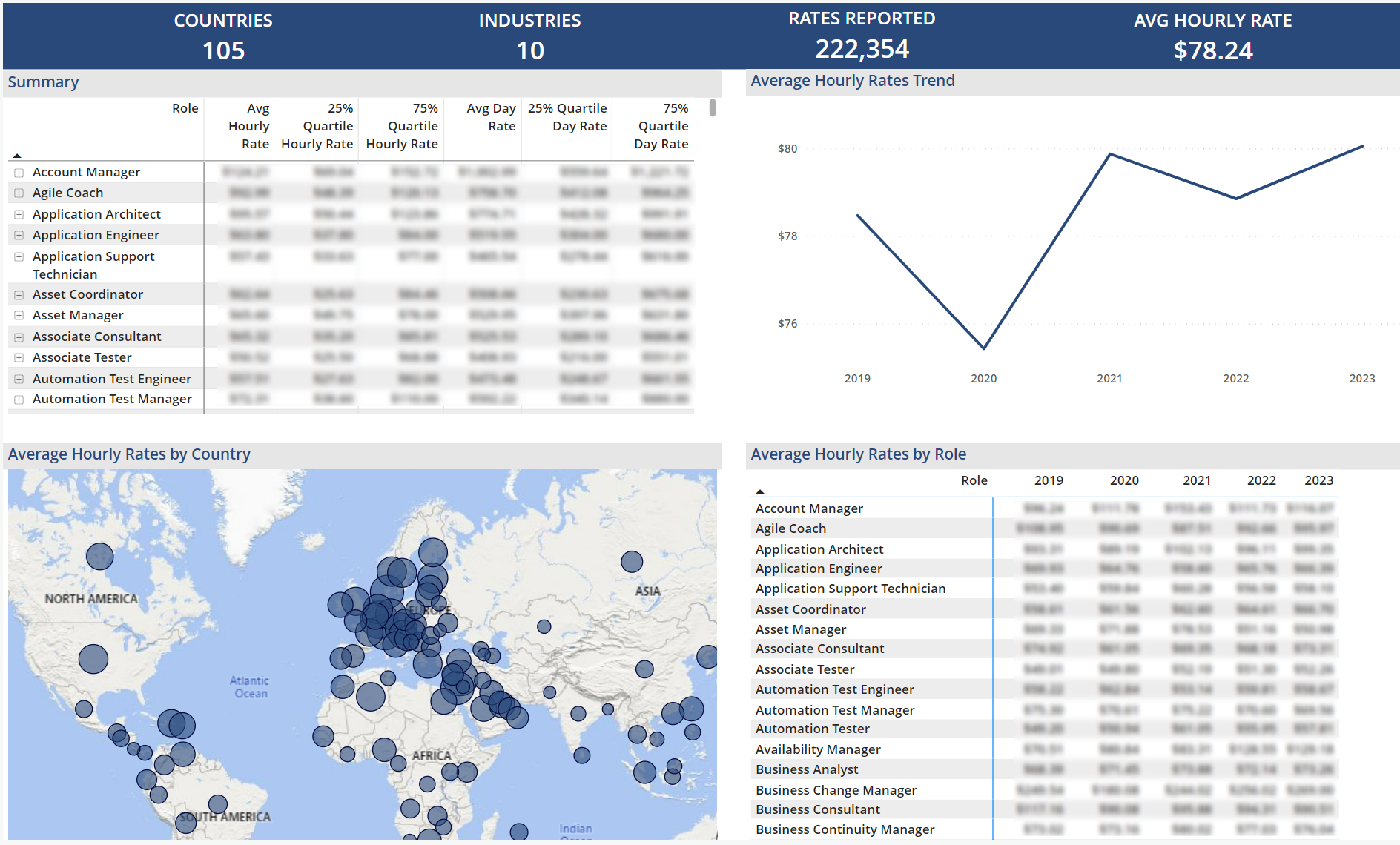
ISG's Rate Card Database sets the industry standard for accuracy and reliability. Our proven methodology, honed over decades of benchmarking experience, allows us to establish baseline profiles and compare your organization's performance with current market data.
Service Areas
Key Parameters
Service Areas
Key Parameters
Industry Groups
ISG is a leader in proprietary research, advisory consulting and executive event services focused on market trends and disruptive technologies.
Get the insight and guidance you need to accelerate growth and create more value.
Learn MoreISG recently published the 2025 ISG Buyers Guides for DataOps, providing an assessment of 51 software providers offering products used by data engineers, data scientists, and data and AI professionals to facilitate the use of data for analytics and AI needs. The DataOps Buyers Guide research generated three reports and five quadrants assessing providers in relation to overall DataOps, Data Observability, Data Orchestration, Data Pipelines and Data Products. By providing an assessment of all software providers with tools in the portfolio of DataOps, the research offers a unique perspective on the extent to which emerging capabilities are being adopted by software providers. Given the amount of noise being made by providers about AI, it’s easy to assume that all providers have already delivered AI-driven capabilities that automate and accelerate DataOps use-cases. However, the DataOps Buyers Guide research illustrates that, for many providers, support for AI functionality remains a work in progress.
Agentic AI is moving from pilots to production systems that execute work across enterprise applications, data platforms and business processes. As I’ve argued before, the value of AI is realized in action, not just answers, and enterprises are investing accordingly. One of the key questions now is how to coordinate the actions among different agents. My colleague Matt Aslett’s perspective on Model Context Protocol (MCP) explains that software providers are quickly embracing MCP as a standardized way for models and agents to find and use trusted data. But context alone doesn’t orchestrate multi-agent workflows. That’s where Agent-to-Agent Protocol (A2A) comes in, enabling agents to discover each other, exchange capabilities and hand off work reliably. Together, MCP and A2A form complementary lanes for agentic systems to share information and coordinate actions.
Enterprise IT leaders face a dual mandate: maintain resilient operations while accelerating digital outcomes. AIOps software, where artificial intelligence and machine learning (AI/ML) models and automation converge across observability, incident response and IT service management, has moved from experimental pilots to foundational capabilities in today’s operations. As CIOs, CISOs and IT leaders look to balance business performance with technical rigor, AIOps offers measurable gains in reliability, velocity and cost control while laying the groundwork for GenAI-enabled workflows. This Analyst Perspective describes the benefits, pitfalls and practical steps for adopting AIOps at scale, with insights for both enterprise buyers and software provider product teams. For a deeper dive, see the 2025 ISG Buyers Guide for AIOps Executive Summary, available for download.
The global insurance industry is at a pivotal juncture, driven by economic volatility, evolving policyholder expectations, regulatory changes and potential AI innovations. Insurers are navigating a landscape that demands agility, personalization and operational excellence. The increasing number of digital-native consumers, climate-related risks and cybersecurity threats are reshaping traditional business models, compelling insurers to rethink their enterprise designs and core strategies.
Public cloud platforms form the core of enterprise AI ecosystems, offering the scalability, elasticity and specialized infrastructure needed to train and deploy large models efficiently. ISG research shows that combining on-premises control with cloudbased acceleration enables organizations to integrate AI-powered intelligence into existing workflows and streamline their operations. Enterprises have been able to reduce development complexity, accelerate time to value and scale innovations from predictive analytics to autonomous operations by leveraging cloud-native AI services, pretrained models and GPU-optimized instances.